April 17, 2012

April 14, 2012

¡Desde hoy YO TAMBIÉN puedo gritar al mundo que mi blog
es de impacto cero!


Participando en la iniciativa ecológica promovida por Geniale.es
lograré que se plante un árbol en una zona con riesgo de
desertificación.


Geniale es la web que reúne y permite hojear online
todos los catálogos promocionales DE LAS TIENDAS MÁS CERCANAS A TI.

WIDTH="512" HEIGHT="250" BORDER="0" ALT="" align="right">La iniciativa es muy sencilla: por cada blog o web que se
une al proyecto, Geniale
se planta un árbol, cuya producción de oxìgeno compensará las
emisiones de dióxido de carbono que produce mi blog o web.


Según el Dr. Alexander Wissner-Gross, un activista del medio ambiente
y físico de Harvard, una sola página web es responsable de la emisión
de 3,6 kg de CO2 de media al año, mientras que un árbol es capaz de
absorber 5 kg. El resultado final es a favor del oxígeno: gana mi
blog y gana el ambiente.


Geniale.es, a través de la distribución de catálogos en formato
electrónico, promueve una filosofía verde enfocada a disminuir el uso
y desperdicio de papel para fines comerciales. Los catálogos más
importantes y conocidos están disponibles ahora también online, como
por ejemplo,

Lidl,
Ikea,
Carrefour, y se pueden consultar no sólo en el ordenador sino también a través
de aplicaciones para iPhone e iPad .


Los catálogos son muy fáciles de hojear, como puedes comprobar:


Media Markt -> http://www.geniale.es/folleto/media-markt

Mercadona -> http://www.geniale.es/folleto/mercadona

Eroski -> http://www.geniale.es/folleto/eroski


La iniciativa está teniendo una gran acogida entre los blogger. El
objetivo de CO2 Neutral es plantar 1.000 árboles en 12 meses, y hoy,
gracias a vuestra ayuda, hemos podido plantar un pequeño bosque que
cuenta ya con 300 árboles. Si llegamos a la meta, añadiremos al total
de árboles un extra como premio al activismo de los blogger españoles.


Para conocer todos los detalles sobre la iniciativa pincha aquí:

http://www.iplantatree.org/project/7

SPS. Alpha:

I think I cannot write about this, but I am really impressed.

"SPS-ALPHA (Solar Power Satellite via Arbitrarily Large Phased Array) is a novel, bio-mimetic approach to the challenge of space solar power. If successful, this project will make possible the construction of huge platforms from tens of thousands of small elements that can deliver remotely and affordably 10s to 1000s of megawatts using wireless power transmission to markets on Earth and missions in space. The selected NIAC project will enlist the support of a world-class international team to determine the conceptual feasiblity of the SPS-ALPHA by means of integrated systems analyses, supported by selected "proof-of-concept" technology experiments."

Source: NASA

March 27, 2012

Low line park:

Inspired in the successful experience of High line park, newyorkers are planning to use again abandoned train rail tracks, but in this case, underground rails. The proposal is located in the Lower East Side neighborhood, one of the most important areas in the city in culture and history, but with a lack of green spaces.

Source: inhabitat

March 16, 2012

Strelitzia reginae

Isn´t it beautiful?, it looks like Grace Jones.

Source: kew.org

March 14, 2012

March 1, 2012

Watch live streaming video from techonomy at livestream.com

February 20, 2012

int

February 15, 2012

"(...)
Landscape Architecture as a discipline calls for the thoughtful application of art and science, linking the past with the future in its projects through a necessary dependence on time and nature.Some professions are especially adept at promoting the harmonious integration of human activity and nature.

Others propose a more rational use of our environment and the natural and cultural resources it offers to ensure optimum economic and social use without diminishing its ecological and aesthetic value.

Among such professions Landscape Architecture stands out with projects that reveal themselves as aforce for sustainable development and progress.
(...)"

February 6, 2012

February 3, 2012

Ski:

We hear a lot of golf courses, landscape impact, water consumption, and environmental costs involved. However, very little is said of the ski resorts. The ski degrade huge areas on the slopes of the mountains, one of the most fragile ecosystems of our country and around the world.

Today I read the bad news that the ski is getting popular in China.


Source: Icex

January 25, 2012

Altermall:

Take a look at this contest. It is an open ideas competition seeking innovative proposals for new types of covered leisure areas. Places protected from the weather, which have the aim of avoid consumerism of shopping centres.

Participants are invited to find a public space with a commitment to meet the social needs of today, integrated into the cities and causing synergies with its urban and social context.

Source: opengap.net


January 13, 2012

Good news:

I woke up this morning with this good new :-)

January 12, 2012

January 7, 2012

December 23, 2011

Eucalyptus deglupta

Eucalyptus deglupta is a huge evergreen tree from the seasonally-wet humid tropics. Indigenous to Indonesia, Papua New Guinea and the southern Philippines. It is the world’s fastest-growing forestry tree, but this is not the main particularity. You just have to see the pic to guess what makes it different. Just google it and enjoy.

December 20, 2011

January 2007:

Love this video, for personal reasons, it transports me to January 2007


O Tejo from Abilio Vieira on Vimeo.

October 27, 2011

Feral Children:

This week I am obsessed with feral children, specially with the film "L'enfant sauvage" (1970) by François Truffaut.


October 21, 2011

Faunia parking:

This is a project based in Madrid, in Faunia, one of this new safari-zoo parks... In this project, is interesting how, this eminently functional space, can be transformed and acquire aesthetic value. The plant selection is very important for the design, and in the species selected, it can be seen the intervention of an specialist.

herbanova.blogspot.com


www.enota.si

September 2, 2011

Local control of precipitation:

Scientists in Genève university are working in a new system to condensate water in the athmosphere.

Is not the first experiment, the most common approaches consisted of dispersing small particles of dry ice, silver iodide, or other salts in the atmosphere.

This new method, is based on photochemical formation of p.p.m.-range concentrations of hygroscopic HNO3 in laser filaments, that will join H2O particles and finally, if the particles are big enough, it will rain.

Source: www.nature.com


August 4, 2011

Wikiflora:

Researchers at the National Institute for Amazon Research (INPA) are developing a new tool, that promises to revolutionize the understanding of the biodiversity of the Amazon. The Wikiflora or WikiBios, a sort of Wikipedia forest, is in early stage and is intended to be presented by researchers at the United Nations Conference on Sustainable Development (Rio +20) in June 2012.

July 6, 2011

Dan kiley and the Miller House:


Dan Kiley (2 September 1912 – 21 February 2004) in one of the most influential american modern landscape designer. I am having a look at his projects, and specially to the Miller house. It is one of the main expresion of functionalism in landscape design.

June 14, 2011

Leafsnap:

Leafsnap is a free iphone application that identifies plant species from photographs of the leaves. Leafsnap is the first in a series of electronic field guides being developed by researchers from Columbia University, the University of Maryland, and the Smithsonian Institution. This website shows the tree species included in Leafsnap, the collections of its users, and the team of research volunteers working to produce it.

Source: leafsnap.com

June 1, 2011

Source: Garrett Eckbo

May 31, 2011

Emotionally vague:

This is an experiment about emotions by Orlagh O'Brien. Asking people simple questions, emotions can be described in terms of direction, colour, words, etc. We should pay more attention to this kind of experiments, and we would be able to better balance our emotions. I liked how easy is to understand, and the presentation of the experiment.

May 4, 2011

25 abandoned Yugoslavia monuments


April 29, 2011

Oudolf:

I just wanted to link to Piet Oudolf webpage, an artist-landscape designer, leading figure of "New Perennial" movement.


April 28, 2011

Poblenou Park

This is a project designed by Jean Nouvel. The project is located in a big surface (5,5 hectares) in Barcelona. The project is divided into different gardens, with a play of light and shadows as a link. Nouvel wanted his signature park to be used by the entire community, in fact the main intention of this park is to create a meeting point. Small details in this park will make you understand the project: lamps, metal chairs, gates, colourful plants, etc. The main garden of the park has a forest very well organized ending at one end of the park with a ramp of volcanic soil. In the second garden, the woodland surrounds the building of the old Oliva-Artés factory and takes the citizens through a visual and olfactory experience. In the third garden the most prominent feature is a crater that carries the visitor with a spiral to the “center of the Earth".

April 27, 2011

Temps des flors:

A new edition of this ephemeral art exhibition is about to start. This exhibition takes place in Gerona, where the streets, alleys, courtyards, gardens and monuments of the Old Town are used to present different projects, done mainly with flowers.


April 7, 2011

New gardens, old concepts (1):

Leto turning peasants into frogs (Martha Schwartz Partners).


Hortus conclusus (Peter Zumthor)


April 5, 2011

Eva:

Eva is a mini composting plant designed by Francois Hurtaud. Huge amounts of organic waste is disposed everyday in homes and restaurants. This waste can be used to produce compost, get energy and grow food. The device uses part of the waste in an aerobic process to grow plants, and part of the waste to get methane and turn it into energy, thanks to a co-generator. Energy will produce light to stimulate the growth of the plants. Everything is done in a device with a cool design.

March 29, 2011

Puya raimondii

Puya Raimondi, also known as Queen of the Andes, is an endemic species of the alto-andina zone of Bolivia and Peru. This plant lives in isolated areas with stone soils and an altitude of 3200 – 4800 m. Puya raimondii has a 10 meters inflorescence with more than three thousand flowers and produces 8–12 million seeds in each plant, but it only blooms once in its lifecycle. It can live about 100 years. The species is officially considered endangered.

Source: www.iucn.com

March 25, 2011

Trees cocooned

This is a result of an unexpected side effect of a flood in Sindh, Pakistan. Millions of spiders climbed up into the trees to escape the rising flood waters. The spiders contributed to reduce the amount of mosquitoes expected due to stagnant, standing water that is around, contributing to reduce the risk of malaria.


Image: DFID/Russell Watkins


March 17, 2011

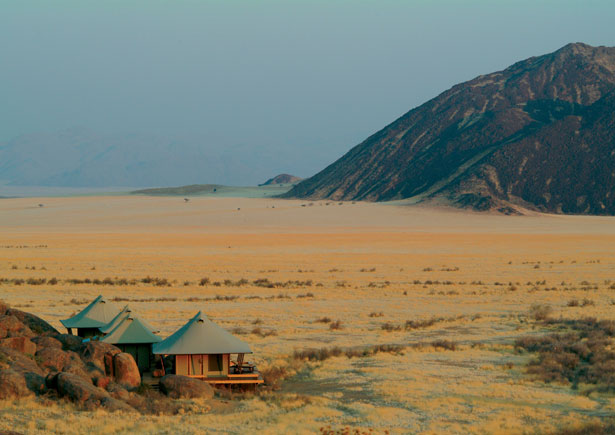
Ecolodges:

National Geographic has listed the top 50 ecolodges. The lodges provide the experience of being in the wildest places in the world, minimizing the ecological impact. They offer great service and comfort in spectacular locations, but they also support local communities, connect their guests to cultures on an authentic level, create impactful conservation initiatives, and increasingly place adventure at the center of the experience.


March 16, 2011

Ibirapuera Park:

Ibirapuera park is a major urban park in São Paulo. It was inaugurated in 1954, in commemoration to the 400 th anniversary of The city. The design of the buildings was done by Niemeyer, and the landscape design by Burle Marx. Ibirapuera Park covers an area of almost 2 square kilometres. The name means rotten tree in Tupi-Guarani, and comes from the indian village based in the region, when the area was flooded.

March 14, 2011

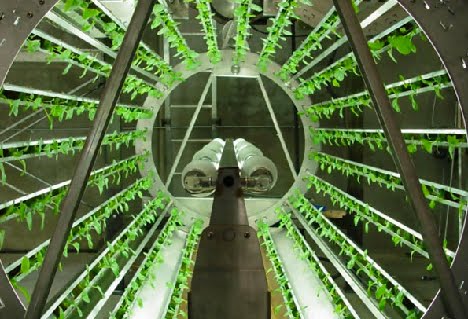
Omega garden:

Omega garden is a company based in Canada. They have patented a rotatory cylindrical system to grow plants in your own home. They provide you a long list of plants that can be grown, although, this system is specially indicated for food production, you can grow other kinds of plants, flowers, for example.. The design maximizes energy and water consumption, it contributes to sustainability by reducing in packaging, transportation and the use of pesticides.

Bio-domes:

Bio domes are an igloo shaped devices for wastewater treatment. This device is a new sustainable solution, designed by Kraig Johnson. The technology is based in the action of bacteria, like most of the sewage treatment plants, but the process is enhanced in a six-foot-wide five-foot-tall structure. To maximize surface area for the bacteria, several plastic domes lined with biofilm are stacked on top of each other, like Russian nesting dolls. The device can be used in existing waste water treatment lagoons, increasing the efficiency.


March 12, 2011


The High Line Design:

High Line was constructed in 1930, in order to put dangerous and unpleasant freight traffic 30 feet above pedestrian sidewalks, 75 years later, pedestrians are put 30 feet above the dangerous and unpleasant traffic conditions, to have a moment away from city’s fast vibe.


March 10, 2011

Gumdrop:

This is a creation by Anna Bullus, an art student at University of Brighton. She daydreamed to give a seconde life to chewing gum. An average of 30.000 pieces of gum are irresponsibly discarded everyday on Oxford street in London. Cleaning a discarded gum on the street costs three times more than the cost of the gum in the market. She spent eight months in the lab to discover how to recycle the gum. Now she owns a company (Gumdrop Ltd) to produce, from recycled gum, pink bubble bins that will be situated around London.

March 9, 2011


Dedon Nestrest:

Netrest is a suspended sofa-like chair designed by Daniel Pouzet and Fred Frety. The material chosen for the net is specially strong Dedon fiber (4 cm wide, instead of 2 cm). The design consists in an over-sized bird’s nest, that offers you a secluded, suspended sanctuary.

Source: www.dedon.de

March 8, 2011

The freedom park S´Khumbuto:

This park is located in Pretoria, South Africa. The project, mandated by Nelson Mandela after the fall of Apartheid, was completed in 2007. There are four key ideas in the design: reconciliation, nation building, freedom of people and humanity. The ecological sensitivity of the site is very high and care was taken to conserve as much of the hill as possible in its natural state. Plants were carefully chosen to relate to the natural plant communities that occur across the site, over 250 species of indigenous plants were used in the project. The design is informed by traditional forms, languages and principles of African architecture and space i.e. curved lines and rounded forms are typical elements. Natural and local materials were used as much as possible.


March 7, 2011

Fordham Park:

This park is situated between New Cross and New Cross Gate stations, in London. The concept of this park was to create a play park with active zones and also to improve legibility and interest for park users and commuters. The illumination of the park was done by Light Bureau, an independent lighting design consultancy based in London. the illumination provided to the park an use after dark. To improve legibility and orientation on pathway lighting, illuminated colour coded lantern markers were designed, each primary route identified with a primary colour of red, blue or green. Well, I have not been in the park, and neither had a chance to have a look at the entire project. I liked the picture though.

March 4, 2011


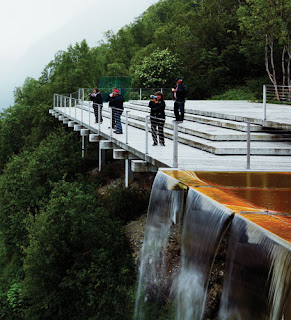
Ørnesvingen view point:

This viewpoint is located high above the Geirangerfjord at Ørnesvingen on the road from Geiranger to Trollstigen, in Norway. The fjord and its lanscape, where the viewpoint is located, is recently acknowledged a world heritage site by UNESCO. The project consists of three overlapping white concrete slabs overhanging the edge of a 600 meter vertical drop, enabling the observer to step out into the airspace. The river on site is guided over a glazed front, forming a waterfall on the very edge of the viewpoint.


Source: 3rw

March 3, 2011

Wollemia nobilis:

Wollemia nobilis is a coniferous tree discovered 150 km north from Sydney, in 1994 by David Noble. The discovery is considered, by some, to be one of the most important botanical finds of the century. When this plant was discovered, there were 40 trees in the world, with a worrying lack of genetic variation. The area, where the species were located, is undisclosed to the public due to posible viruses introduction. Nowadays due to a propagation programme, is present worldwide, and a well considered ornamental tree.

March 2, 2011

Bamboo Bench:

The bamboo bench is a design made by Gal Ben-Arav, from Israel. He chose this plant because is renewed very quickly, so the product ensures sustainability. Its high mechanical strength provides durability to weather conditions. Gal Ben-Arav belives in the establishment of a new agricultural industry, creating new economic opportunities, new sources of income and making the bamboo a local material that saves the need to import.

Source: contemporist

March 1, 2011

Pavener project:

Pavener project aims to developing a system for collecting the solar energy absorbed by asphalt paved surfaces. Asphalted paved surfaces can heat up 70 degrees in days of strong sunlight. This energy can be used for heating systems, air conditioning systems or hot water supply. The system would reduce consumption of fossil fuels, as well as greenhouse gas emissions to the atmosphere. Structural stability and thermal behaviour are the key aspects to consider in the development of the system. Pavener is two-year project is being led by the Campezo Group, based in Spain.


Source: European comission

February 28, 2011


Sorry! this is taking me time, thats why there are not new posts...